
A premium energy and lubricant manufacturing platform for Sri Lanka.
Ceylon Energy Corporation is positioned as a high-value industrial and energy platform built around lubricant manufacturing, supply-chain resilience, import substitution, and long-term export capability across the Indian Ocean corridor.

Sri Lanka, Colombo 1, World Trade Center, East Tower, 5th Level. Director: Vernon Gabriel.
Tax No: PV 00306037 📧 info@cec.ad ☎ +94767613366 ☎ +79185565750
Industrial positioning aligned with national demand, strategic geography, and scalable export potential.
The project is structured around lubricant blending, packaging, import substitution, and a longer-term industrial scaling path tied to logistics, storage, and potential feedstock integration.
Sri Lanka’s location supports Indian Ocean routing, regional distribution, and a credible export platform for selected surrounding markets.
The domestic market remains materially import-dependent, while vehicle growth, infrastructure activity, and industrial demand create a durable commercial base.
A phased structure reduces early complexity: imported base oils and additive packages first, then capability deepening and market expansion as operations mature.
Modern lubricant blending, packaging, and industrial market positioning.
The proposed facility supports gasoline engine oil, diesel engine oil, gear oil, and selected industrial lubricants. The model combines manufacturing capability, quality orientation, logistics relevance, and scalable market entry.
Overview Project Scope
Refinery Complex
High-value industrial energy infrastructure with a strong corporate presentation.

Offshore Platform
Broader energy-sector exposure and large-scale industrial capability.
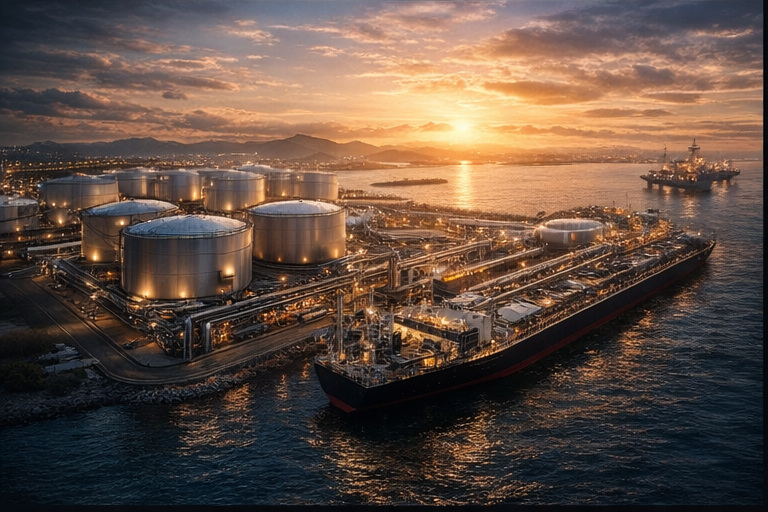
Terminal Assets
Storage continuity, maritime logistics, and industrial flow management.

Lubricant Laboratory
Technical quality, formulation control, and product-development orientation.
Import dependence, industrial demand growth, and the case for local large-scale production.
Sri Lanka’s lubricant market remains dependent on imported material inputs and significant imported finished products. That creates a clear economic rationale for a credible domestic manufacturing platform.
Demand support comes from transport activity, industrial expansion, infrastructure development, power-related applications, and increasing quality expectations in lubricant consumption.
The production concept relies on automated blending and packaging lines, high-quality sourcing relationships, technical process control, and a staged implementation model.
- Automotive and industrial lubricant product lines.
- Equipment and technical partnerships with established suppliers.
- Imported base oils and additive packages in the initial phase.
- Location logic tied to energy zones, ports, and incentive frameworks.
Production and commercial sale require licensing, environmental approvals, and standards compliance. The proposal also references incentive pathways connected to industrial investment and BOI-type support structures.
Indicative capex, operating logic, and break-even structure for the proposed facility.
Indicative capex covers land and buildings, blending and packaging machinery, installation and utilities, and working capital for inventory and raw-material cycles.
Operating structure is driven primarily by raw materials, then labor, overhead, and market development. The economic model points toward a five-to-six-year break-even horizon after applicable incentives.
Domestic sales anchor the model first, while selected export channels add foreign-currency relevance and diversification.
Foreign-exchange savings, direct and indirect employment, technology transfer, supply continuity, and industrial deepening are all part of the proposal’s value case.
Diversified sourcing, early regulator engagement, phased capacity build-out, and disciplined commercial positioning reduce execution risk.
Advance into a detailed feasibility and execution package with technical, financial, site, and regulatory workstreams running in parallel.
Ceylon Energy Corporation
📍 Sri Lanka, Colombo 1, World Trade Center, East Tower, 5th Level.
Director: Vernon Gabriel.
Tax No: PV 00306037
☎ +94767613366 ☎ +79185565750